Saturday, September 22, 2007

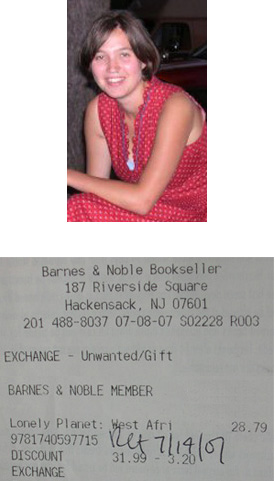
penny neff, recovering ngo'er

About a month ago I saw Penny Neff on gchat and we had the following conversation:

me: hi! are you lost?
penny: haha, why?
me: i've never seen you here! [on gchat] also, i forget where you are
penny: well, now i'm back in jersey, at my mom's house. i was in nigeria, working on a short-term project for an NGO, but i was in a car accident so now i'm back home recovering
me: oh no. what happened?
penny: i was in a head on collision and broke my back

I had to google "broken back" just to stay in the conversation.

Last I had heard, Penny was teaching at an environmental school in the Bahamas, with an unbroken back, so I was surprised by about 100% of that conversation. I had met
Penny in biology class during our senior year at NYU, and after I convinced her to start coming to Earth Matters! meetings we became pretty friendly. As someone perpetually considering moving to Africa and doing NGOish work myself, her situation and story resonated with me quite a bit. And thus, about a week after visiting Penny at her mom's house in Teaneck, NJ, I asked her if she'd tell me about the accident.

So you were in Nigeria.
That's a good place to start. I went with an NGO, OIC International, based out of Philly and I got there around July 15th. I was a "medicinal plant specialist" - I had studied bush medicine in the Bahamas. The "specialist" part actually made for some awkwardly hilarious moments when people thought I could tell them all about their plants in Africa, and I had to explain that expert was a bit of a stretch. I got introduced as a plant doctor at a village's micro business training and everyone went crazy.

What were you supposed to be doing there?
My project was to be three weeks long, but the actual project changed several times, Originally I thought I was going to be working with a women's co-op that wanted to grow medicinal plants for sale, and I was to assess who they could sell them to, what plants would be most interesting to outsiders, etc.

But then I found out I was supposed to work with a school in the same town, planning a botanic garden. However, the morning I was supposed to start - I had met with my host family and everything - we got a call that they had been robbed the night before and my project manager didn't think it would be safe for me to go there. You also have to understand, I was going to be in a village with no electricity or phones, where even cell phones didn't work, so if something went wrong I would have no way of doing anything about it. We visited the village and it was beautiful, but more middle of nowhere than I'd ever seen before.

Did all of that make you nervous?

Not really. The weird thing is that for some reason I had a feeling something would go wrong from the beginning. Maybe just because the NGO seemed disorganized, but when I told people I would see them later, I thought in the back of my head "as long as everything works out". But I wasn't necessarily nervous, just prepared for something to go wrong.

How were your first few days?
Well, the first 2 days were totally disorganized because I didn't know what I'd be doing or where I'd be doing it. I was eventually reassigned to a village called Alok, and I moved into a hotel room in Ikom, a bigger "city".

Alok has these amazing stone monoliths carved 2-3 thousand years ago, and the Cross-River State Tourism Bureau, among others, is working on an outdoor museum. In the south eastern part of Nigeria, near Cameroon. I was going to be working with an American girl, April, interviewing the local oral historian about medicinal plants near the monoliths, to collect information for tourism literature and signs for the museum as well as perhaps plans for villagers to market medicines to tourists.

The third day, I was in the forest villages, seeing drill monkeys,which were assumed to be extinct and are now being captive-bred for reintroduction into the wild. Then we got a late start back to the hotel - that was when I got introduced as a medicine doctor and there was a lot of hubbub. Seven of us were piled into a pickup truck: me, April, Kennedy (an OIC director), Patricia (another volunteer like me), two other volunteers and our driver Charles. Charles, April and I were in front, buckled up, and everyone else in the back wasn't wearing a seat belt, as far as I know. Also, it was dark outside, and because it's the rainy seasons there now, it was raining.

Right before the accident, I remember thinking that we were going too fast and I wanted to say something to Charles, but safety is really different down there and I’m sure he wanted to get home. I would say we were going about 40 mph, maybe faster. As we're going around a bend, a car coming at us starts swerving. At first I thought they were OK, just took the curve a bit too quickly, but then they were coming right at us. For a while afterwards I kept seeing the car coming at us and the cracked windshield with light shining through. I remember thinking right before we collided, "oh shit, this is going to be bad. There are no hospitals anywhere." It happened very quickly and I don’t think either car tried to slow down before the collision.

The other car was in your lane?
I think so. I couldn't see any of it after the fact because I couldn't move. The police determined that it was the other car's fault, whatever good that does.

I remember opening my eyes after the impact, and I had hit my head on the dashboard and immediately became conscious of terrible pain in my lower back and abdomen. I felt as if my torso was being strangled by the seat belt. I opened the door and tried to take off my seat belt to stop the pain, but I remember that the back of my seat had collapsed and it was difficult to get to the seat belt release. April was sitting next to me and tried to help me out of the seat belt, but I got tangled and fell out the car door. Then I just laid on the side of the road next to the car, not knowing what to do. The whole time it was pouring rain. April was freaking out because she had hit her head and was covered in blood.

What was your first thought?
Immediately I was thinking, shit, back injuries are BAD. After the accident, I was carried out of the rain to a shelter off the road (I believe by people in the village where the accident occurred) and I was then put in the back seat of a car to be driven to a hospital in Ikom. My back felt like it was collapsing and of course no one knew how to carry someone with a spinal injury and I must have sounded like a nut, screaming instructions to everyone. I'm not sure anyone could understand what I was saying, which was mostly just, "Support my lower back!" Also I was freezing and I really wanted someones coat. I was shaking uncontrollably, but mostly I wasn't able to talk much at the time. The pain was so intense, I have never felt anything like that before and I didn't feel like I could make sense or think properly or anything.

How were the other people in your car?
Patricia, one of the other volunteers, was injured pretty seriously and got put in another car and taken to a different hospital The others were scraped and bruised and in a ton of pain, but up and moving around.

Then you went to the hospital?
The hospital was in Ikom, which was about an hour from the accident. The doctor at the hospital wasn't there right away, so I laid in bed by myself for a while. At some point the doctor came back and I got an IV and was given some pain killers, but the doctor didn't do much else, not even look at my back or take my pulse or blood pressure. I ended up checking my own pulse because I was freaked out no one else did it, and it didn't sound too fast so I decided I'd probably be OK. I was in the women's ward, with at least 5-10 other women that moaned and coughed all through the night.

At 6 in the morning a preacher came in to get everyone up with some inspirational talks about God. And, of course, the doctor left for the night with no instructions to give me more pain medicine, so I woke up around 1-2am in terrible pain. I felt like such a pathetic American, wanting medicine while everyone else suffered. The people generally spoke English, but that doesn't mean it's easy to understand for an American...the accent was totally nuts for me. And beyond the language, our expectations are so different in a hospital that I felt like often I couldn't communicate with people.

Did you talk to the other patients at all?
No, I couldn't move and no one was right next to me. The next day some of them came up to me to say they were sorry. (That's what everyone who visited me did: apologize. I still can't figure out what it meant, exactly) I spent most of the night just writhing and calling for the nurse.

What was your mental state like?
Shit shit shit shit. There's nothing to focus on but the pain. in some ways it was a very stable mindset. It makes me understand why people with chronic pain sort of lose themselves. This might sound all dark and creepy, but I really thought that if it continued hurting this much there was no use in living. Which is way too dramatic since I wasn't dying, but I just didn't know how to handle it. And at the time, I was terrified of having internal bleeding, since I knew I wouldn't get help in time for that, It's hard to explain how difficult it is to know what's going on when all you can look at is the ceiling or sky.

Were you in touch with the other people from your car?
Kennedy was with me. April came to visit the next morning, I think - it's all sort of fuzzy. I was told that Patricia, the other American volunteer, was at a different hospital but that she was OK. I think everyone but Patricia visited me the next day.

Kennedy told me that they were arranging for an ambulance to take us all to a better hospital in Calabar the next morning, but we didn't leave until after 4pm, so we had to drive at night again, which totally freaked me out. The goal in Calabar was to get x-rays and hopefully more consistent pain relief

Were you thinking to yourself, I'm keeping it together pretty well, or that you were going crazy, or were you not even thinking about kind of stuff?
I wasn't thinking about it at all, really. When I was on painkillers I tried to keep it together, especially since everyone I'd ever met in the area visited me that first day in the hospital and I wanted to be grateful and not a raving lunatic. But it was driving me crazy that everyone kept saying they were sorry, or that I would be fine, or that God was watching over me, but no one except April would just talk about it like it was. That's the American thing. I just wanted to talk about the reality of what I could be facing. Same with her, since she had a pretty fucked up forehead, lots of glass and all

How was the new hospital?
I was just wishing wishing wishing that I'll be greeted by EMTs who know how to carry people and work a stretcher (no one knew that the stretcher in the ambulance could come out and roll, I think it was the first time the ambulance was used). So we get to the hospital and there is a nurse and doctor but no one who knew how to work a stretcher and I had to explain about taking it out of the ambulance, and then of course the clinic was not set up to accommodate things like that--all stairs and small hallways and tight turns.

Overall the new hospital was much nicer, but they still didn't give me consistent pain medication, so I was a roller coaster of pain and then sanity and then pain again. There was actually a really interesting article in the NY Times about this, the lack of pain medication in developing countries.

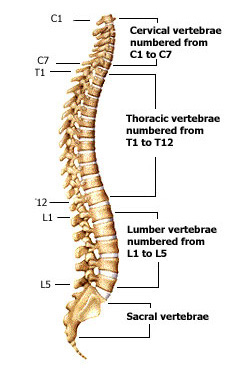
I got an x-ray the next day, 3 days after the accident by now. First day I had a full meal, too, but I couldn't really eat because everything hurt so much. The x-rays showed that I had several fractures in the lowest vertebrae, L4 and L5. The orthopedist said they were potentially unstable, as in, possibly going to cause or already caused nerve damage. I was fitted with a traveling fiberglass torso cast and from then on was treated as a spinally injured patient, which means special ways to turn me on my side and move me, etc.

Did the doctors have a prognosis for you, aside from maybe nerve damage?
They just wanted to get me to a better hospital where I could get an MRI, so this whole time my air evacuation was trying to be sorted out. The NGO fucked up and their insurance wouldn't cover it, but luckily I still had my global insurance from my work in the Bahamas. So it was decided I was going to be flown to Paris.

Can you explain the insurance issue?
The insurance was a complete mess the whole time I was there. Essentially, they found out after all this that their insurance only covered local evacuations. Another woman, Patricia, was also in bad shape and it was going to cost $90,000 to get us both to a better hospital in Europe or the US. They didn't find anything in her x-rays, but it ended up that she had I think 3 pelvis fractures that are hard to see in x-rays but easy with CT scans. So she ended up being flown home on a normal flight, in coach, and it was terrible.

When they found out about their insurance - they told you as a sort of "well, this happened but we will take care of it", or as in "well this happened and we don't know what to do now?"
"We'll take care of it," but it didn't seem like anyone really knew what to do and I was pretty nervous. They couldn't pay for it without approval from the board--anything over $30,000 needed approval. I also didn't have a cell phone so I could only hear about things from the American side when I talked to my dad once a day. There's a whole inquiry thing going on right now, and they changed their insurance right away. So finally it became clear that the fastest thing was to get me out with my personal insurance, not their travel insurance. The whole insurance thing was stressful...the hopelessness of the situation felt terrible, I felt like I was never going to know what was wrong with me and get help.

Anyway, I was picked up 6 days after the accident by a little jet to fly to Paris.

How was the Paris hospital?
Paris was a bit less eventful, just good health care. I was very excited when the nutritionist came to see what I wanted to eat and said that there were 22 varieties of cheese. They said I had no neurological damage, although apparently I was close.

What did they say about your recovery?
Well, that I'd have to be in my super crazy corset for 3 months, that I'd probably be fine but was at risk for arthritis and back pain my whole life. But that I would be able to have children, be normal, etc.

How long were you there?
About 10 days in Paris. At some point we should talk about the other people, really.

OK. The people from the other car?
Yeah. There were 8 people in the other car, which was a sort of taxi, taking a bunch of people who were all going towards the same place.

Only 2 survived, a mother and her son. I don't know much more than that. The woman got out of the hospital rather recently; she was apparently at the same hospital as me, but in a different room so I never saw her. I haven't quite figured out how to handle the fact that other people died, and it was probably mainly because we were in a truck and they were in a small car. April saw them and said that it didn't look bloody, but I think 2 or 3 people were dead on impact. I was sent pictures of the cars after the accident, and the little car essentially has no engine left, the entire front is gone. I’m not sure how they even got people out of the car.

Were they all Nigerian?
Yeah, from different villages I think. I’m hoping to send my leftover money back to the woman who survived. You know, we never knew much about the other people, since no one knew them, they were just passing through. I know that one of them was traveling with 90,000 naira (about maybe $700 or something) and the villagers collected everyone's belongings and returned it to the deceased's families and the villagers apparently took care of the woman's child until she was conscious.

It was a classic clash of privilege, you know? We were in a new Hilux truck, some of us wearing seat belts, expecting good health care and then the other car was so small and I doubt anyone was wearing seat belts if there were 8 of them in it, and they essentially had no chance. The woman who survived stayed in that first hospital, I think. I’m not sure what they were able to do for her, really.

I mean, there were chickens running under my bed in the morning. It just wasn't what a Westerner would accept in terms of health care. I felt totally conflicted because I wanted my nice safe health care, even though I knew it was unavailable to so many people and that I was coming from such a privileged place.

Health care or any sort of social capital in developing countries is at such a premium. "Brain drain" - probably about half of all Nigerian doctors leave the country as soon as they can.
I know. Apparently at Patricia's hospital, at the very beginning, the doctor was great, probably trained in Europe, but had no supplies to work with. And my orthopedist was wonderful, but he couldn't do anything but send me elsewhere. The nurses all said to me, well, now childbirth won't be hard for you at all

Do you see any connection, irony or...fittingness or god damn-ness about going there to study a sort of indigenous very natural kind of medicine, and then the aftermath?
Haha, yes, it was fairly fitting. I really respect just basic medical care and think that we Westerners are very lucky in some ways, but we have come to assume that our health care is normal and death and pain are not, and its just not like that in other places. And hey, morphine is from opium. Yay plants.

Now you've been home for month, month and a half? How has it been?
Yeah, probably 6 weeks I think I was a lot better off before I came home in someways, because I was just focused on survival and not; really emotional and not thinking about the future, except for one conversation with my physical therapist about what my life could be like. Then...I'm living in my mom's living room. unable to walk, really. can't shower, can't eat sitting up, and I’m like, shit. I’m a cripple. This is terrible. Of course, I got better quickly, but there's something OK about being unable to take care of yourself when you're in a hospital with nurses who are paid to do it. It's very different when you're back in your mom's house at 24.

When you got to Paris, did they take off the Nigerian fiberglass cast?
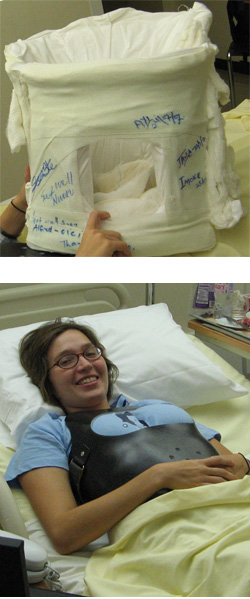
Yeah, and fitted me with the fabulous corset that you witnessed. I wanted to take my Nigerian cast with me because everyone had signed it, but it was too big. My new French corset was hard plastic and went from up by my collar bone down to my lower back/butt. It was black with straps and a hole for my breasts, which made me feel like a mix between Batgirl and a 19th century porn star.

I've now got a 3rd brace, that's a bit lighter weight and made from cloth and foam. The 3rd one makes me feel very medical. It's white with a lot of strings and metal clasps and velcro - but it breathes more.

What have the doctors been saying lately?
It seems like I'm healing super fast - I thought I was going to have to be in the French corset for much longer, about 3 months, and he said I should move on to the new back brace after only 2 months. I saw the latest x-ray and my main bad fracture just looked so much nicer and smaller. I should be able to start physical therapy in a few weeks, which to me is really when I start to begin that next step in the healing process. Even though I can lead a more "normal" life now, I am still reminded often that I am weak and my body is not responding to things as it used to. I think most of that is now muscle weakness, and I can't wait to be able to stretch and exercise and restrengthen my back. It's very funny, I used to hate exercising and now the thought of it is really comforting.

If OIC offered you another job in Nigeria, would you go back?
Oh, that's a really great question. I think there's two parts to that: was the work I was going to do really that useful? And, am I too scared to go back?

For the first part: Because of the accident, I've been focusing on the medical system in Nigeria, its lack of resources, etc. However, we did not talk about the actual usefulness of the work I was to do in Nigeria, or in general the benefit of US development aid as it is now. I'm not sure how much development work needs to be done by Americans traveling to Africa, instead of by the affected people themselves. Which would be more positive locally, as well as save money that could instead go to local people--I mean, several thousand dollars was spent to send me to Nigeria. Our funding required my airline tickets to be on an American airline, but was that the best option? I don't know too much about it, but it seems that a lot of US money goes to helping Americans, who in turn "help" Africa--a good example is selling cheap US commodities to NGOs in Africa, who then sell the US commodities at low prices to make money for the organizations. All this at the expense of and instead of buying from African farmers or African manufacturers. I'll plug another good NYTimes article.

The NGO I was working for is not involved in anything like that, as far as I know, but I do think that sometimes our aid is not really as useful as we think or hope it is. My experience in this area is extremely limited, but I want to learn more about it. I'm also not sure what other possibilities are out there--it seems like funding requirements can really limit options. At the same time, it was such an amazing and exciting opportunity for me, personally, that it's hard not to be grateful and hope for that sort of thing to pop up again.

As for the second part: when I was in Nigeria in my various hospitals, everyone kept asking me if I would come back and saying they hoped I would. I mean, the freaking governor visited me in the clinic. This was clearly partly a tourism/funding thing, as well as I'm sure genuine concern that I wouldn't come back to their country. And I would think, hell no, I just want to get home where there are traffic laws and emergency rooms. Then, once I got back, I wondered about my project and how it was going and how much I personally regretted not being able to really talk to the local oral historian and medicine expert, and I felt like if I could, I would want to go back and finish my project, although I think by the time I can travel comfortably my role may already be over (or I may need to make some real money). Now, I feel like in some ways I was intimately involved in how things go in Nigeria and really experienced what it is like to leave your expectations back where you come from (even though I was treated to the best there was). I met so many great people while I was there and so quickly understood how cultural and historical and economic differences affect everything and I feel sort of humbled.



Thursday, September 13, 2007

emily nemens, kerouac resident

In the November 24, 2005 issue of Time Out New York, an article entitled "Feast for the eyes" talked about new art installations in the city. Seven artists were mentioned, including Picasso, Warhol, Rauschenberg, Matthew Barney and Emily Nemens.

Emily was a friend of a friend who started coming to our weekly soccer games in McCarren Park about a year ago. We became fast friends and I soon became privy to tales of her art shows, concerts, and book readings. Over the summer I read about half of a draft of Blue Eyed Apples, her novel about two 20-somethings, and her graphic novel, A Long Walk Home, about the bombings in Madrid. Four months later she sent out a mass e-mail saying that she would be living in Florida for three months, the latest recipient of The Kerouac Residency. She will live rent-free in the Orlando home of Jack Kerouac where he wrote parts of The Dharma Bums.

I spoke to Emily last Thursday night, a week into her stay, about some pretty lofty things - the 50th Anniversary of On the Road, living and writing in Orlando, and whether or not she is a polymath.

How long have you been in Orlando?
I arrived last Wednesday, so 5 or 6 days.

What is the house like?
I would call it bungalow-esque. It's from the 50s, if not earlier. It was a duplex when Jack Kerouac lived here. You enter in the front and there's a kitchen and a bathroom and a bedroom, which is where I am sleeping. Then in the back there's a separate entrance where there is a big workroom and a small bathroom and a small bedroom, which is where Jack and his mom lived.

How did you hear about the program?
I was looking for a residency through NYFA, the New York Foundation for the Arts, which has a really big searchable database of resources.

What did you use as a writing sample?
I used the first chapter of my novel, which has yet to be published.

Is it going to be published?
I'm workin on it. Will you publish it?

Were you a big fan of Jack Kerouac?
I like him. I hadn't read anything more than On the Road, in all honesty, but I liked that book a whole lot. I have since read The Dharma Bums, since he wrote that when living here. But I like On the Road more.

What about On the Road do you like?
When I first read On the Road, it opened my eyes to so much: this youth culture, this American landscape, this remarkable style of literature. Now I see it more as a cultural icon and reference point; I've seen a lot of those places, know a lot of people like that, read other things that pushed literature in new directions. But this one book did so much of that for millions of people, really opened America's eyes, helped the country come of age.

What if it were The Dean Koontz Project or the Dan Brown Project, would you have applied?
Yeah, I would have. Actually, Bob Seger also used to live here, so I guess there was a big debate about whether or not there'd be the Jack Kerouac House or the Bob Seger House. But mostly I was looking for a way to get out of New York City and write for a while.

What do you think of Orlando? Is it a good place to live if you want to stay in and concentrate on writing?
It's a good town to concentrate on writing in. I've gone out once, on Friday, with a kid I travelled with once. It was a little like an overgrown frat party. - none of us were in love with it, but it's also the place where people go, begrudgingly. It's also a very car-centric city, and I don't have a car. 5 blocks is a long way to walk here. So it's a good place to buckle down. I've been here less than a week and I'm still working out the schedule. I've been getting up at 7 or 7:30 - I like writing in the morning. In Brooklyn I'd get up at 5:30 or 6 and write for 3 hours before work if I had a good idea. I'm trying to cope with the mid-afternoon doldrums, when you've been working but the day's not over yet - either I'll settle down or I'll buy myself a small trampoline.


What are you working on?
Right now I'm trying to get some illustrations out the door. I'm collaborating with Harvey Pekar - which is wild and crazy. A professor of mine edits a lot of graphic novel anthologies and Harvey Pekar was looking for someone to illustrate a script for an anthology of a bunch of stuff by Studs Terkel.

You're Ryan Hagen's wet dream right now.
Hi Ryan! Yeah, it is random and fun. The drawing style isn't exactly my scene or come particularly naturally to me, but with due diligence, it'll look the way comic books are supposed to look. I did the drawings in New York but there's a million hours of Photoshop work at the end, retouching the scans.

So in addition to the Pekar stuff, I also want to write some short stories.

What's the expectation for you down there? Do they know you're going to be painting?
I don't know that they know about the art stuff, but I don't see why it would bother them. Especially if I'm like, "it's a graphic novel...." But it really is a very open residency. I came in saying to them, "I wrote this book and I really want to write more but I can't think hard enough in New York." I have to give a reading at the end, that's my only obligation.

What's it going to be like?
I think it's going to be wine and cheese-y, with a lot of people from the community, but I'm not sure. The last woman that was here kind of took Orlando by storm; she just sold her book and is starting the Columbia MFA program now, so she had her shit together in a way I can only aspire to. Using her as a model of what the residency is like would be problematic for me. But then again, I could.

What are your short stories going to be about?
I have an idea that they will have the same cast of characters as my novel and tie into the novel in some way. Instead of saying, "I will compose a novel," I like working in a way where things come back
around.

Novel is done?
Maybe near the end of the residency I'll pick it back up but for now I'm really happy with it. So I just need to convince someone with a press of the same.

Do you want to give a short synopsis of it?
Sure. It's called Blue-Eyed Apples, and it's a coming-of-age story that is set about five or seven years ago. It's about a boy and a girl who grow up together and move across the country and learn how to make buildings and make movies side by side.

Have you been focused on the story between the two characters, or is there a big preoccupation with the style?
Well I had this idea, and, well I still think it's a good idea, but it's put me into an experimental realm of fiction that's harder to get out there, but the idea that the novel is written as a film. As a painter I really like to talk about art and visual things, so I wanted the narrative to be very visual. So it almost reads like a movie.

Has that changed in the past months? The draft I read had parts written as a screenplay.
I took out most of the screenplay elements. That's a physical...that's a movie written down, and it's not quite the same effect for the reader. So now it's just written in a very fast paced and intense style.

You have a piece of writing on the Kerouac Project website. What's that?
That is adapted from a chapter in the novel. I had this idea of the American road and seeing the country, experiencing that as a young man. It's two friends driving to every baseball stadium in the country, one or two a day, over the course of a month in the summer. I really like baseball. They asked for something and it something that is obviously...Kerouac-ian.

Is that what the Kerouac people expect from you? What if you wrote, say, a meditative love letter to isolationist stock brokers? Would they ask you for rent?
Well no, they're a pretty laid back crew down here.

You're talking about travel with regard to writing now, and from what I know of you personally, you talk about travel fairly often. But what you're writing about isn't an undiscovered little cave in Andora with giant green frogs - or the converse, critiquing that kind of thing. You're talking about the flyover zones and stuff that's in front of us. David Foster Wallace wrote a little thing once about how he thinks domestic or familiar travel is endlessly better than foreign travel that is an imposition on places that would be unequivocally better and realer without tourists.
Something that always comes back to me is nostalgia. Collective nostalgia and personal nostalgia. My mom is from Nebraska and I've been there, but once my grandmother passed away, I didn't know when I was going to go back to Omaha.

On your website you can see the links to your articles from the Brown newspaper, bits of your fiction, your graphic novel, paintings of yours, mentions of your saxophone gigs. Why so many things?
I think because I have to. I wish I didn't; I wonder sometimes if it's lack of principle, and if I want to be a writer, why did I bring my saxophone to Florida?, but I like learning how to express myself in different ways and I like putting myself in hard situations in that way. I would have been fine being an English major in college, but I decided that I wanted to learn how to paint, and painting with oils is one of the hardest things I've ever done. So I could have stopped at any point, in learning these different mediums, but I chose not to. I don't know, we're still young so maybe something will get ousted in the next few years, but I hope not.

Do you think of yourself as a polymath?
Oh, I don't think I've mastered any of those things. I've been fortunate that some things come pretty easy to me, but I also take that to mean I work very hard. The fact that I learned how to play the baritone saxophone doesn't mean that I think a lot of myself for it. I want to learn it better. I think it's just more that I like knowing about the different things out there and having a cache of experiences through them.

The traditional graphic novel form doesn't really do it for me. But the idea of putting words and images together is great. I'd love to find a way to put them together that is more synergistic with my practice.

When you work in all these different mediums, are you dealing with similar issues, or is it, "I generally paint when I am sad, write when I am inspired" type of thing?
Like I said, I really think nostalgia. I keep coming back to being an observer of person. There's a lot of different ways to observe. I'm not a science-fiction writer. I really am trying to capture the human emotions and the beauty in the world around us in my writing. And with painting as well. A lot of times those are fleeting things, that are gone, but I want to find them. My favorite thing to do is to get my saxophone and play a jazz ballad, one of those really old-timey Duke Ellington kind of things. I know there's a lot more music out there and I should be playing different things, but that's what I like to do. I wish I could write adventure stories or play be-bop better, but I'm drawn to the sort of beauty of either sadness or nostalgia or memories.

Sadness, but when you say nostalgia, you're trying to get at it in a positive sense, more like Our Town than Winesburg, Ohio?
Because I'm an optimistic person, but, well, my graphic novel wasn't particularly optimistic. It was me walking around literally for a year with these images in my head and not knowing how to cope with them; I'd been in this foreign country during this bombing and I didn't know what to do, and it took literally drawing pane for pane all of that confusion and all of those horrible images, it took going through all of that again, and I came up with a coherent work out of that.

In that case, you experienced it and a graphic novel was what came from it.

Yes. I think even my fiction is an extension of that, taking people or places I've been and re-imagining them. If I meet someone at a coffee shop, what happens when they go home? Or someone tells me a story about their mother and I'll think about that mother six months from now, what it was like for her to grow up. It feels very weird to be our age and be stuck in the past, to be so enamored with old-timey music and wear vintage dresses and to prefer making hand-made books instead of websites. But then again, I'm stuck there.

Stuck there as in, your job was doing graphic design and making websites for people.
Yes. But with my art, I feel like painting is on its way out. Of course there's digital stuff now and it feels very antiquated to commit yourself, but also necessary, and I'm interested in taking old images, paintings or found photography, and giving them a second life with an outdated medium. So even my painting has something to do with nostalgia and things past.

Do you find that because you're doing writing and music and painting, and living in New York, that it's hard to concentrate on any one, or even to read a lot of books or listen to new things?

Yeah, it is. It's really good to be down here. There were times [in New York] when I found myself only listening to Swedish power-pop for a few weeks, just because I forgot to try something new. There are weeks when I only read The New Yorker. And that doesn't make me happy, I don't like that. It's amazing that since I've been down here I get up, I write, I write some more, I read some, I work on this Harvey Pekar thing, and then it's 11pm. It's amazing anyone functions in New York I guess.


Emily Nemens is 24 and will return to Brooklyn in December.
Some of her work is available at her website.
If you own a printing press, she will gladly send you her novel.


Tuesday, May 8, 2007

jim therkalsen, re: mother's day

I've been friends with Jim Therkalsen for about 6 months now, and in the interest of professional decorum will describe him thusly: Jim looks like a normal guy but distinguishes himself from Joe Everyman by being notably blunt and funny. He is quite good at soccer and works in advertising.

The following interview took place on GChat, with me knowing full well that I intended to post the interview, and him periodically wondering why I was asking him so many questions about Mother's Day.

hey jim, how old are you?

28. 29 in June

what's your earliest memory of Mother's Day?

um, I don't know if I have any memories of it.
it's just another day that I sometimes remember to buy flowers on.

when you were a kid did your family get together and do something special? Or do you have no memories of it at all?

i would say none at all.
we maybe would go to red lobster or something
but I don't have a specific memory of anything. i also don't have very many specific memories
of anything
do you remember mothers day things?

is your mom particularly unsentimental or are you and your father particularly uncaring?

more of the uncaring variety. not so much uncaring as oblivious.

what about Father's Day? same thing?

ummmm, no. we play golf with my dad on fathers day a lot
and with my grandpa

you and your brothers? do you have any sisters?

one younger brother and one younger sister

so did your sister hang out with your mom on Mother's Day?

I'm always worried I'm going to use the wrong word talking to you and feel like an idiot.
like oblivious. I know what it means, but after I wrote it I looked it up on dictionary.com

well the only words you've been using so far have been brother sister and mother

my sister used to be a homebody, so she was always hanging out with my mom.

i was just watching a documentary with subtitles and someone said "remunerate" and i wasn't too sure it was a word. sure enough, it is. to settle a financial matter

mothers day usually = family dinner
renumerate sounds right. remunerate sounds wrong.

yeah, dif words. who knew

I'll be damned.

what about your parents' birthdays?

my dad's is right near father's day and my mom's is right before christmas, so they get combined celebrations


do you know if your dad usually did anything for your mom on mother's day?

he usually gets her flowers or presents (clothes) I think. my dad is a very guarded person and
never shows emotion or appreciation unless it's through sarcasm

was there ever a time when he underdid it or completely forgot Mother's Day, and your mom got angry?

I don't think so. My mom is also not really the angry type. she would just get sad.

hypothetically, or one time she got sad?

hypothetically.
what's with the questions?

have you ever forgotten mother's day?

I'm positive I have forgotten it.
i forget everything

with any repercussions?

not that I remember

did she bring it up afterwards?
or you just remembered a few days late and said sorry

no, she didn't bring it up. she never would.
she didn't even bring up that I forgot their anniversary, I was talking to her and looking at my
calendar and realized it was two days earlier. she didn't even say anything
i usually remember late and send a card or something.
are you working for mothersday.com?

is your parents' anniversary a bigger deal to them/your family than their respective days'?

are you doing an article on bad sons?
I would say anniversary is to them, but we don't do anything as a family for it. mothers/fathers
day involves family activity

what do you think of mother's day? corporate behemoth capitalist hallmark god damn hell in a handbasket just be nice to her everyday instead?

I think it's a Hallmark holiday, but I think it's good for people who aren't overly thoughtful. It
reminds you, hey, mom is great I should do something.
And if you're like my dad and don't typically show emotion, you can do something nice and not
feel--whatever it is he feels that makes him what he is

why is your mom great?

she's just a generally warm, giving, genuine person. very understanding and thoughtful, good
sense of humor, just sort of takes things in stride.
she's also not jesus crazy or cat crazy or addicted to prescription drugs or botoxed or any of the
"bad mom" stereotypes.

given my mom's current state, this conversation has just become very awkward

is she crazy?

no no, just a joke

alright. you could have gone on with that.
and I would have pretended to feel bad, but then talked shit about your mom to all our friends.

well i didn't say "no no, just a hilarious joke"
what are you going to do for mother’s day this year?

this year I sent my mom some tulips from proflowers.com.
the least thoughtful thing I could do.


how'd you choose proflowers.com? i thought 1800flowers.com was the standard

they send me an e-mail that said "don't forget flowers"
it was just their luck that I had been thinking about mothersday.

well jim, i have a feeling that when your mom gets her pro flowers, she will smile. but when she gets an e-mail saying, "head on over to ilovepostage.blogspot.com and check out the newest interview" and reads what you really think of her, she will smile even more

and when my dad reads it, he will show no emotion.

i think the only stumbling block is
do you know if your dad usually did anything for your mom on mother's day?

he usually gets her flowers or presents (clothes) I think.
my dad is a very guarded person and never shows emotion or appreciation
unless it's through sarcasm
it doesn't matter, he knows he's like that.
we make jokes about how we're all (the men in our family) sort of like that.

i could change your answer to say "he usually gets her flowers or clothes. he's more of a sarcasm kind of guy and less of a buy things for you kind of guy"

nah, leave it.

anything you've been meaning to tell your folks but can't do face to face? does it smell like mothballs in the closet?

give them my love and tell them not to worry about me; i'm modern man.
alright. i have to go take a #2, then go to bryant park and take a nap. see ya.


Jim Therkalsen's personal website is www.jimtherkalsen.com.
He also maintains a blog, I'm an Idea Man.


Thursday, March 1, 2007

wendy brawer of green map

Wendy Brawer has lived in New York City for 20 years, and has spent most of them seemingly determined to sear the idea of urban environmentalism into all of our heads. As the founding director of the Green Apple Map and Green Map System projects, she charts the progress of sustainable development in the city using icons for community gardens, eco-friendly restaurants, and green buildings. Brawer is also one of the most recognizable figures at environmental events throughout the city and is a fixture at Critical Masses.

Since its inception in 1995, the Green Map System has distributed over 1,000,000 green maps of New York City and assisted in the creation of green maps in 50 different countries. The project has also overseen the creation of 2 green maps of Lower Manhattan, authored and designed by children from 20 schools below 26th Street. In 2006, they released two maps, the Powerful Green Map, which charted energy issues across the city, and the Composting Green Map of Manhattan, which Brawer hopes will energize composting programs across the city.

I visited Wendy at the Green Map System's new office on East 4th Street, speaking with her about green maps past and present, her opinions about the city's handling of bike issues, and what she really thinks about everyone's favorite elevated rail structure

The Green Apple Map project started after a conversation you had with a roomful of people before the UN's Rio Earth Summit. Can you talk a little about the initial goal of green maps, and who they were intended for?

It was in the lead up to the PrepCom for the Rio Earth Summit at the UN that was going to attract environmentalists from all over the world. They were expecting something like 3,000 people to come work on Earth Summit documents for five weeks. At the time, I was trying to come up with a product that was both green in its materials and had this message and way of getting people involved in new york’s progression toward sustainability. But, I mean, who knew the word ‘sustainability’ then? and i also had a clock ticking and no budget. so, what could i do quickly - it took us just six weeks - what could involve a lot of people in its creation as well, and would could we produce for very little money. But it turned out the map was useful for everybody.


When you showed it to all the people, what was their reaction?

Well it was positive. Maps are universal tools, you don't need to know the local language to read a map, they're very lightweight, resource efficient; so it fit. There was a sense that there was no environmental movement here, and it showed it from that perspective. It proved that New York actually had this groundswell of activity going on in all parts of the city. It started to show patterns of change, so you could see that certain neighborhoods were changing more quickly. A map changes your worldview; Even on the first map, you could see which neighborhoods were being dumped on and treated unjustly.

Then In 1992, the map was featured in the Cooper-Hewitt exhibition. Is that when you knew it was something you’d do again and again and spend more and more time on?

The Cooper-Hewitt was thrilling, but even before that, the map immediately had an "A-ha" reaction to it. It was very exciting, and after the map started getting out - we made 10,000 - people started writing in and calling. Then the 2nd map was published about 10 months later. That one got out further around the world. On the 2nd map, we used Wingdings and a font called Animal that we got from a Mac users group, and I noticed how people reacted to those symbols; on the first map, we used letters, like G for garbage or gardens, and we didn't have a good symbol system. But people were really drawn to the map when it used a symbol system, so a Green Map iconography that everyone could use became a priority.

Currently, how much time do you spend on Green Maps vs. your design company?

Well I haven't done much besides Green Maps since 2000. My last project for Modern World Design was at Liberty Science Center, creating a solar exhibit on the roof of the museum. It had the world's first solar theremin.

Can you talk about what inspired you to make the energy map?

Well the reality was that our map had too much stuff on it, we couldn't print the text any smaller, or make the paper any bigger while still making it portable. We really wanted to have a print map, because they capture a moment in time and behave differently that other kinds of maps. Once we started looking closely at energy in the city, we started including more on the map, for example our food choices.

To me, food is a big part of the climate change talk; methane from the animals, are you buying local? - but no one seems to be talking about that. Especially on the governmental side, I'd be really interested to see what's going to happen.

I think what I got from the energy map was that I thought it was more
of a reference guide than a map - you put in some little narratives,
some suggestions.

Also there had to be a glossary. When it came out in February - before Al's movie - there were a lot of climate change skeptics around. They were like, "It's a cold day, how could this be global warming?" So there were a couple other issues, but it seemed like energy was the most important, with the war and all the injustice that's created over energy, it seemed to fit right in.

Then the newest map that just came out a month or so ago is the composting map. Can you talk a little about that?

Yeah, it was really fun. It came out of a conversation with the Lower East Side Ecology Center about how we could work together. We both have the support of a funder that is really focused on Manhattan, so the first map was Manhattan only, but now there's interest in doing a city-wide composting map that will be online. I think composting in a boom that's about to happen, and if you commit [a map] to paper, it's very hard to update it. We really need to get more composting going here because there's just so many benefits to it; you get that wonderful soil, you don't have to take the waste away.

I think one of the things that comes across in the composting map, as you see the familiar outline of Manhattan, is that you see, in the Lower East Side / East Village and in Harlem, these very developed pockets of sustainable resources, and then everywhere else in Manhattan is sort of bare. Why do you think it hasn't been done in some areas?

That's one of the great things about putting it on a map, that you can see who's doing it and who's not. We're actually talking about a reprint of the map already, there's been a lot of stuff popping up.

But I think people think it's a problem because there isn't good infrastructure for it. There's three whole places in the whole of Manhattan where you can drop off your composting. If you don't belong to a community garden, you have to go to one of those three places. A city like Tokyo picks up composting that's been separated by everybody. I really feel like the city is going to rethinking its whole waste program. I hope they move recycling to the Department of Economic Development, make more compost sites, maybe even in school yards. But there's schools everywhere that could take advantage of the hands on learning experience that comes with composting.

Actually, when I saw the composting map, the first thing I thought of was food. When you look at one of the normal Green Maps, and you see that your area doesn't have a community garden or a lot of green buildings, there are a limited number of proactive things you can do. But with composting and food - CSAs, Green Markets, co-ops - it's much easier for you or you and your friends to get something done, to put themselves on the map.

You're right. And food is the kind of the decision that even a 6-year old makes at least three times a day. We have wonderful local food around here, from farmers markets and CSAs, and city farms are growing. You don't see enormous farms in the city, but we may need them some day.

When you're making a map like this, a map designed to tackle issues of progress, you want and need the community to be involved in it. So I guess what's left is how some of that community would use the map.

We really hope to change their lives in a positive way; to use it as a guide, even to a place you know quite well. Sometimes people use it to connect with nature. Maybe you have somebody that takes vacations to get some fresh air and now they know that it's right around the corner. Or, they can use it to get involved with groups that working on some of the issues we talk about. That's a really important part of the map. Or maybe they'll discover that something they thought only happened uptown also happens in their neighborhood. Getting people to change how they've always done things, that's a big goal for us.

Can you talk about how the bicycling scene in the city has changed?

Everyone's gotten more focused on policy, on the political ramifications. I'm in shock that New York City isn't doing more to encourage cycling and make the streets safer. Another cyclist was killed yesterday and once again, I'm pretty sure that there was no summons for the driver. That's become the norm, and why is that acceptable? Any other kind of manslaughter would be prosecuted. It's shocking.

We've been relegated to the gutter. Today I think is the vote on pedicabs in the city. They want to cap the number of pedicabs, but not the number of stretch limousines. The city's not really thinking ahead. What I see coming up is a lot more bike-based transportation; I think there can be a wonderful kind of flowering for purpose-built bikes. They're not cars, but a lot of the time, they really, truly could replace cars. It could be such a convivial, positive thing for New York. I'm not seeing a lot of encouragement for that to happen and that's troubling, because it's...ideal.

But I think more than anything, we'll see more and more bike shops. I've asked the city, and I'm continuing to write letters to elected officials to say, Why don't we take the tax off of bikes and bike gear? At least for Bike Month, to encourage more people to ride that way.

You were just talking about politics and Critical Mass is one of those very visible political struggles.

There's so many different kind of things going on and Critical Mass is only one. But for some reason, Critical Mass has been demonized, and sometimes people feel like, "OK, I'm going to back off for a while until things change," instead of saying, "OK, I'm going to make things change." And I don't really know what those people are thinking, you'd have to ask them. Dissent is patriotic. Many people feel that to question what the government is doing is the wrong thing to do. There's a study that compared the impacts of protest to other kinds of policy action, and they found that protest is more effective. And I wish that study would get out more. I think we've become very complacent as a culture, about the things that are going on, and we forget that small effort from people can make a difference.

There's no advertising on Green Maps.

How to pay for Green Map production is a local decision. Our rule is that anyone that sponsers/supports a Green Map has no say about its content. So aside from getting grants and other help from big groups or organizations, we send the ready to print PDF to some of the sites on the map, and we say, "Hey, can you help us print more copies?" And we got a good response.

We're making this resource called the Greenhouse right now, which is an online content management and collaboration tool center. So we're moving our registration off the desks here and onto the Internet. So that'll make it easier for people to get started - we hope. It'll give every Green Map project a place to talk about how and why they're making the maps. It'll also give the public more of an idea of how to contribute to the project. So this all goes online, hopefully, in May. Hopefully it will help our growing regional hubs all over the world; we're really in favor of decentralized leadership.

Any ideas for new themed Green Maps?

There's actually a big list of them. But one of them is a water theme. We have 600 miles of shoreline here, an amazing drinking water system; water itself is going to become more of an issue, around the world especially. The city makes such a nice
bike map, so there's no need to do that. A Green Schools Green Map is a possibility too, charting both K12 & universities in NYC.

More generally, since you're in design, what do you think of some of the more prominent projects around the city, like the Brooklyn waterfront development or the Stuyvestant Town sale or the High Line?

I went up to the High Line with a Design Trust for NY a few summers ago, but I'm not a big High Line fan. I like that there's an easily accessible greenway a block and a half away. I think the High Line should be reserved for growing food and some kind of energy generation. Maybe a huge greywater recycling system for all the water used by all the buildings around there. Now it's going to be a public park and I'd like to see those millions of dollars for park development be used in neighborhoods that don't have parks. It's going to be a fortune to make it handicapped accessible and everything else that you need to do now to make public space truly public. There's tremendous possibility there, but they're kind of stuck in this park idea. It's going to be an elite park, and with the greenway a couple blocks away, it's a funny place to do it.

Wendy Brawer is an ecological designer based in Manhattan's East Village.
Her website is http://www.ecocultural.info


Wednesday, February 21, 2007

missed connection kay

I have this fantasy where one day I will be sitting on the subway and I will watch two cute people eye each other up, awkwardly flirt, and then one of them will walk towards the train exit, look over their shoulder and yell "Missed Conn me!"

I browse Missed Connections every now and then, and a few days ago I came across one titled "Dear Mr. Iowa City." 13 e-mails later, I spoke to Kay Fine [not her real name] on the telephone.


Hi Kay. Should I start by reading your posting?
Sure.

Dear Mr. Iowa City - w4m - 30
Date: 2007-02-16, 9:22AM EST

I enjoyed talking to you this morning (brunette/F train). You seemed
very pleasant and interesting, and I like eavesdroppers (no, really).
I am completely noncreepy (30, librarian, Texas), and decided to post
this even though now I'm going to get random emails from 41 guys with
pictures of their genitals. Anyhow. If you are single, feel free to
drop me a line (I usually don't mention dada, like, 8 times per casual
conversation). Otherwise, take this as a random compliment from a
stranger on the subway. Cheers!

That's you.
Yep, that's me.

When you hear it now, are you happy with it?
Oh no, I'm totally happy with it.

Fun and random?
It was fun and random.

Can you describe what happened on the subway?
I was on the subway with my sister and we were talking about lots of things, but
it came down to when we were going to buy a house together, and where we were
going to buy a house together. The topic comes up often, and we were trying to
decide between Minneapolis and Iowa City.

Why those two?
No particular reason. Both sound nice and that's about it. Oh, and maybe when
civilization ends, those two places would be pretty good.

So then this guy was like, "Did I hear you talk about Iowa City?" I said, "Yeah" and he
said, "Iowa City is great." And I said, "Oh really.." and then we talked about Iowa
City, and he lived there for seven years, after he lived in South America, and the
whole point was that I want to go there because that's where the Dada Archive is. So
we talked about the Dada Archive. Though I'm not sure he knew what the Dada Archive
was. But he seemed really smart.

Can you describe him to me?
He was tall and he had dark hair and he has a beard and he had blue eyes.

What kind of beard? Long and scraggly or stubbly or..
No no, like an average beard. I'd say it was approximately...an inch long.

How old do you think he was?
I don't know, actually. He said he lived in Iowa City; um, I asked him if it was when he
was a kid or an adult and he said, "Adult-ish", and then he said it was between the
years 22 and 29. So I think he was probably at least 35 if he realized that he wasn't an
adult when he was 29? That's my guess.

You know how some people look like a Jim or a John - Did he look like any of
those to you?

Mmmm....yes, but only in comparison to what he didn't look like. So if you named a
bunch of names, I could tell you that they were wrong.

What about one of those names like Smith or Johnson? Did he look like one
of those?

No, I don't think so. He was pretty plain looking.

I hate those. Plain but good looking, right?
Yeah, not it a bad way.

How did you leave it, at the end of the encounter?
We were talking about Iowa City and then Dada, and then he said, "Well, you
know, good luck." Then his subway stop came up and my sister got off too,
and I was very jealous...cause he was getting in the same car as she was, but
then it was too crowded and so he couldn't get on the subway, and I was happy.

Did you guys talk about the Dada exhibit at MOMA? Did you see it when it
was here?

Oh, no we didn't talk about it, but of course I saw it. I have a large Dada tattoo, and it
was showing when I went to the exhibit and somebody commented on it and said it
was very nice.

What's the tattoo of?
It's a collage of Dada cartoons.

Was this a first time post on craigslist?
No....no. I met my current best friend from a post on craigslist.

Oh! Can you tell me about that?
I posted 5 questions, and then people replied. That's how I sort of knew I was going
to get pictures of guys' genitals. It was in the "Strictly Platonic" section [of craigslist].

This missed connection, though, was not in the "Strictly platonic" section.
No, definitely not. "Strictly Platonic" is ah, not platonic...nor missed. This is definitely missed.

Did you get pictures of genitals this time?
No no. I got 2 e-mails: one from you and one from a guy strongly in support of Iowa City.
It was nice and he wasn't gross at all.

Did he also ask you to meet up so he could ask you questions?
No, no. You were the only one.

In the post you said you were a 30-year old librarian from Texas. Did you
dwell on how to describe yourself?

Well I needed to explain that I was 30. I realized that he was probably at least 35,
and I look very young, and I didn't want him to think I was 20-something.

30, from Texas, and also very modest.
In what...? And a librarian is always a very disarming kind of profession.

How did you get into being a librarian?
On accident. I had graduated with a lot of degrees in things, and I dropped out of grad
school to move here, and then I got a job here and got a huge promotion to be a librarian.

What did you originally go to grad school for?
I have a degree in evolutionary biology, and then I was going to get a degree in history
and social studies of science. But then I dropped out.

So you grew up in Texas? Did you enjoy it there?
I love Texas. Very much. I grew up in Dallas, but I lived for eight years in Houston,
which I like a lot more.

Have you ever heard the quote by Edward Abbey?
Edward Albee? He doesn't like Texas? He taught at the University of Houston, why
doesn't he just leave..

Oh, no, sorry. Edward Abbey. He's an author and an environmentalist.
Oh, well of course he doesn't like Texas then.

Yeah, the quote starts, "Why pick on Texas?" and then he lists all the
reasons; he calls it vulgar, cultureless, and anti-cultural, mediocre and false.

Well, that's stupid. He's wrong.

Will you ever move back to Texas?
We were also talking about buying a house in Austin; we like Austin a lot.

Why with your sister?
Because I love my sister a lot and she's awesome.

Why do you want to move out of the city? Would you raise kids in the city?
Oh no no, I think that'd be horrible.

Kids that grew up in the city are crazy, and they have crazy stories..
Or they're European.

European? Oh, right right.
I don't want European kids. I want kids that speak English. I don't much care for the
Euro children.

Haha. I grew up in Germany actually.
Uh oh. Were you a brat?

Yeah, pretty much. I lived in Germany for a while, and then in Venice
for about 8 months.

Were you in...Wiesbaden?

Ah, yes, actually. The entire time. How'd you know that?
Oh, really? Oh. Well...well, you're young. You wouldn't know my friend who was there.


If you think you know Mr. Iowa City, feel free to e-mail me at ilovepostage@gmail.com and I'll pass the message along.


Friday, February 16, 2007

ray alvarez of ray's candy

You probably know Ray's Candy Store as "the belgian fries place" or "the ice cream place" just off the corner of Seventh St. and Avenue A (113 Avenue A). It is owned and presided over, every night, by Ray Alvarez, a short, old guy with oversized glasses and a baseball cap willing to chat/mumble about anything with anyone. The store is something of a gathering place for lots of East Village mainstays like Mosaic Man Jim Powers, Clayton Patterson, Bob Arihood, and Tompkins Square Park crust punks.

I talked with Ray late Tuesday night, just as the snow started to fall and the last wave of weeknight drinkers stopped in before they headed home.

How long has the store been open?
I’ve been here 32 years, since 1975. 24 hours a day, 7 days a week. The last vacation I’ve had was 1955, when I was a waiter. Everybody that works here, they’ve taken a vacation. But I cannot afford it; I need the money. There’s some jobs that I need to do: nobody knows how to wash the ice cream machine, mop the floor, nobody wants to order what we need and keep track of everything. So I am here, I do it.

Have you ever missed a day?
I’m here nights.

Oh, right, you work nights. Have you ever missed a night?
I get here, 6, 7:00 at night, until 10:00 am the next day. But I’ve never missed a day.

Do you prefer the nights? It’s your store - why nights?
Oh, nobody wants it. Nobody wants it. I hired one guy, I came to check out how he was doing, and he was sleeping on the floor! And the door was open. So I’ve been working the night for 32 years. He worked only one day. Well, he slept all night.

You’ve really never missed a night? Do you get sick?
I cannot afford to get sick. I even don’t’ have time to die - I am 74 years old. When the big man with the fork comes in to get me, I’ll say, “Get away, I’m busy.”

You live upstairs?
For 33 years. I was born in Turkey, 1933. Then I came here around 1955, then went back, and I moved here around 1964.

I see that you’ve gotten some new sauces recently.
I used to only have ketchup and mayo. One day this woman walked in and said, “My name is Mrs. Hellman, I am 86 years old.” I said, “I will marry you Mrs. Hellman, I don’t care how old you are; just ah, because you are rich, I marry you.” She said “no, I just want to sell you sauces. I heard you’re selling Belgian fries - I have sauces for that.” That was 10-20 years ago.

But now all of a sudden you have 8 or 9 new sauces: chipotle. Why the new sauces?
Oh. The new ones are hot. People - Spanish, Indians, some Americans - they like the hot. “You got anything hotter than that?” they say. “Yeah, Tabasco” I’d say. So I got the new sauces.

I’ve seen an old picture of the store with an awning that says, “Truth, justice and the comics”. Whatever happened to that awning?
Yeah, that was the slogan from Newsday. Newsday had that on their cover, and they gave me a free awning. And they stole my sign, a Breyer’s Ice Cream sign shaped like a leaf that said “Ray’s Ice Cream”, that I’d had for a very long time, and I don’t know what happened to it. But the Newsday awning fell apart after a few years.

I’ve come into the store a few times and heard you complaining about your landlord.
Yeah, her husband died and then she husband died. She came from Ukraine in 1950, and died 1982-83. So the son is in charge now, and he has about 25 buildings. He hired an agency to take care of the tickets, violations, all the run-around, for all the buildings. The agency gets 1/4 of every dollar he makes. They want to make money, so they raise my rent. Gotta get them quarters.

Have you ever considered moving the store?
No, no. I’ve decided to die here. If they let me stay here, one day I’ll drop dead.

There seem to be a lot of local guys that hang around here.
Yeah, there’s a lot of them that hang out here. Artists, a lot of different guys. This is like the heart of the East Village. They hang out here, they appreciate the atmosphere, they know each other, they know me.

You don’t mind?
No, no. They don’t smell, I don’t mind. Today someone came in that smelled bad. I said, “I’ll buy you coffee and a hot dog.” I put 3 hot dogs in one bun and gave them the coffee and said, “You gotta take it out. Free, but you gotta take it out.”

Well, the big thing about the East Village now, for a long time I guess, but now too, is how it’s changed. This last change, the one we’re in the middle of now, when did it start?
When Giuliani became mayor. He just didn’t tolerate any, anything, anything. He just wiped them out.

So you think it started with Giuliani? Not Dinkins or Koch or ..
No, no. It was Giuliani.

At this point, a couple knocks on the door, which Ray locks around midnight. They order 4 sausages and fries. While Ray is in the back making food, a homeless woman knocks on the door. I yell, asking Ray if I should open the door, but he can’t hear me. After a minute of yelling, I open the door and let the woman in. As Ray walks back to the front of the store, he recognizes her.

This woman was knocking at the front door.
Oh, no no no, not this one in. You let the wrong one in buddy. She’s got to go!

The woman paces the length of the narrow counterspace, knocking into the couple and me every pass.

Look, you can’t do that! You’re pushy, you can’t be pushy!

She remains in the store for an awkward three minutes, until I unlock the door and gesture to it while offering her a few dollars. The couple leaves a few minutes later.

I’m really sorry Ray, I didn’t know. [I laugh] We were just talking about the homeless so I figured she was a regular.
[Laughs] I regular pain, that’s what she is. She’s the kind that says, “You must pay, or else.” Boy, that girl: she got to go! She comes in most days with $80 or $90 in change and throws it at me. I say, “I’m not dealing with that. You got to go!” If I open the door, I always look and think, “How much will they smell?” Then sometimes, “Oh no no, we’re closed.”

But that’s what Giuliani did, eliminate all that. And all the mafia sanitation. At every red light, there used to be bums with rags, waiting to clean your windshield. And panhandling, on the street and in the subway.

A lot of cleaning up. Did that change the neighborhood?
Oh yeah. I hope he becomes President. He’s running - he can be a great President.

So the change was for the better?
Oh yeah. I love Rudy. I am lucky to be here. I told my landlord, just don’t throw me out, I’ll pay out anythign you want - I told the old lady before she died. She said, “This is the East Village, this is Avenue A. You and I don’t belong here.” I said, “Charge me anything you want, I’ll pay.” I started here for $60 a month. Then up to $80, $150, and then it went up to $800. Then she said, “You don’t belong here.” I said, “Charge me anything you want. I’ll pay.” So she jumped from $800 to $2,400. Now I’m paying $4,000. Plus my water bills, electric. Electricity in the summer, $2,500. Winter, $1,800.

Does the money worry you?
The money I borrow. I have 18, 19 credit cards. I borrow, I pay the bills. Then in summer, I make money, I pay the bills.

So it’s been a long time since you’ve been making a lot from the store?
Money is not my - Ah, it’s good to have money but I am concerned with my health and my peace of mind. Money comes and goes. I’ll do this as long as I can get out of bed. When I can’t, I’ll buy a gun and bang! [laughs] No, I don’t know really, what I’ll do when I cannot get out of the bed.

What’s your favorite thing on the menu?
Anything I make has to be the best. Otherwise I tell the customer, “We don’t have it.” I buy the best. Hot dogs: Boar’s Heads. I say, make the best and biggest. The customer will keep on coming back. If you screw somebody once, give them 15 fries for $8, you’re never gonna see them again.

You get written up in newspapers from time to time. Do you read the articles?
Sometimes yes, sometimes no. I used to save them and I had a whole stack upstairs, but a leak ruined them all.

A reporter, Curtis Sliwa, he’s on ABC radio at 5am, he used to come in every morning and buy 20 papers and coffees, then go in a cab. He used to talk bad on the radio about the mafia, John Gotti’s people. So one day they catch him here and beat the shit out of him; broke his arms, his leg. But he didn’t stop. Then another day, he got into a cab after he got his papers, but it was a stolen cab - the mafia was driving it. He says, “take me to ABC” but they took him to the East River. They shot him 5 times and I think he climbed out the window. The next morning, all the news cameras came here and said, “What did you see?” I said, “He comes in everyday and buys coffee. I just saw him get in the cab.”

What are your favorite places in the neighborhood?
I like Veselka. Everytime I go in there, they don’t charge me, because my next door neighbor owns the building.

Oh, you should go everyday.
Well, they give me free food so I don’t go everyday. But if I run out of syrup or straws, I go over there and they give some to me. But I’m getting old, I don’t need to eat much anymore.


Sunday, January 28, 2007

bouncer at karma

last night i went with joe to his friend yvette''s birthday party in the basement of karma lounge, one of the only bars in new york where smoking is still allowed. because they allow smoking, a security firm is stationed all over the bar making sure everything is tip top re: the fire code.

one security guard was assigned to the downstairs area, where most of yvette's 20 or so friends were doing the limbo. the security guard was sitting on a couch with a funny look on her face, so i went over to chat with her.

Hi, can I interview you?
Sure.

Really? Great! My name's Mike.
Hi Mike.

So, how do you know Yvette [birthday girl]?
Huh?

Um. So you work for a security firm, right? How long have you been doing that?
Well with this firm, a month.

Is this your first time at Karma?
No.

How many times have you been here?
Three weekends....three weekends.....about a month.

Oh, neat. [Gesturing to the limbo] Does this happen very often?
No, never.

Do you think this is white people do all the time?
[Laughs] Man, I would not know.

Would you do the limbo?
I guess. But I'm at work right now. I'd have to be participating in the party.

Any chance you'll participate in this party?
[Chuckles] I don't th....I'm working.

A party at your house might feature the limbo?
Probably not. Well, I guess it could. Maybe. Probably not like this though.

Haha. Not like this? Like what?
Man, you're trying to get me fired.